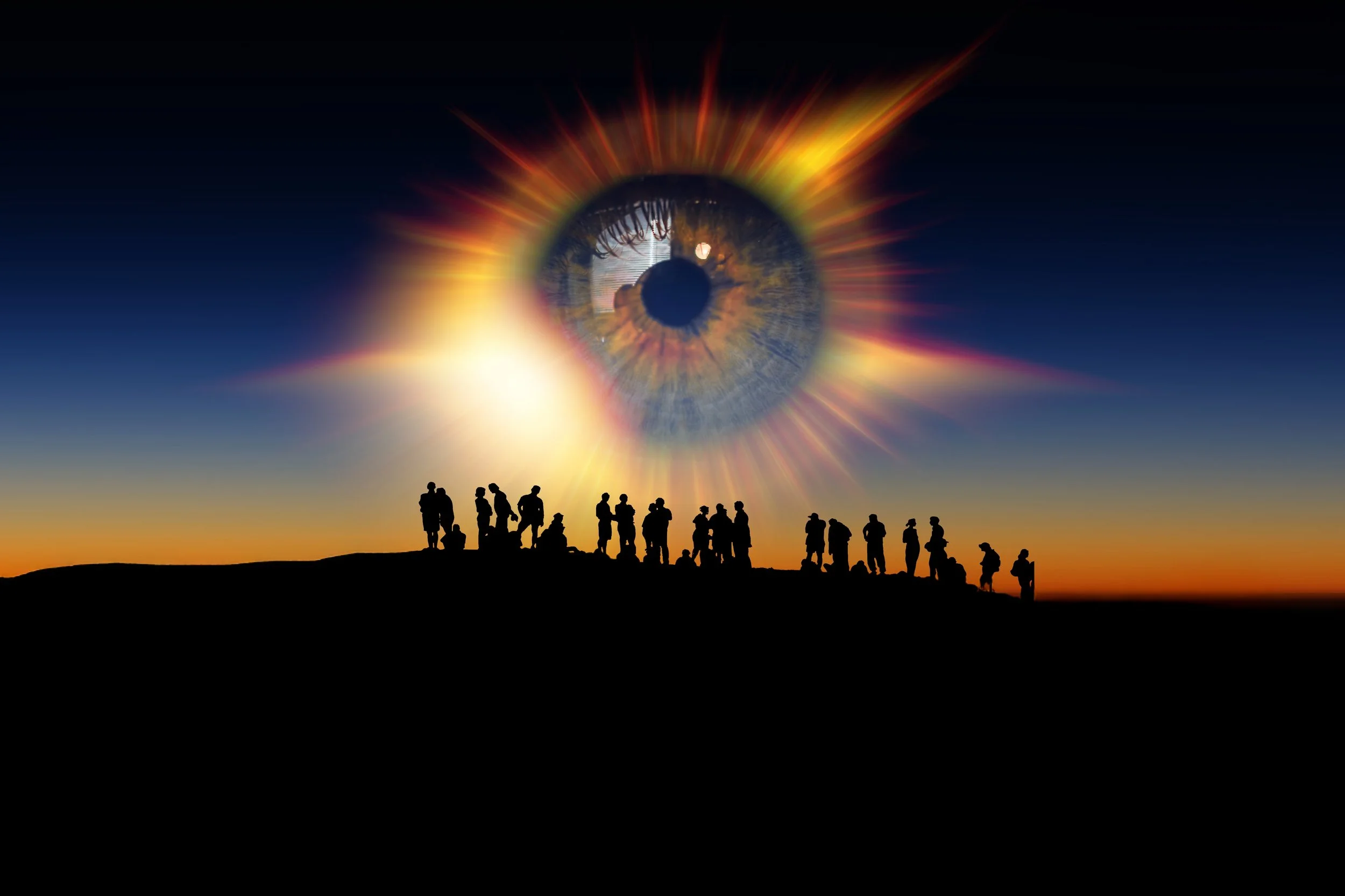
Image by Gerd Altmann from Pixabay
It doesn’t seem plausible, yet it’s a fact that two people looking at the exact same thing at the exact same time, won’t see it the exact same way—even when standing right next to each other, and that includes the way we see people.
I learned about this concept some time ago when a vendor, who held a doctorate degree in psychology, was talking about the various ways consumers saw his products. I found it puzzling and pushed for more details, and that was when he asked me how “evolved” I was. He needed to choose the right words to explain that within any group, people not only interpret situations differently, they see each other differently. “Nobody sees her the same way you do,” he said, pointing to a woman in the store.
How was that possible?
You see what you see, right? There’s nothing to interpret; it’s right in front of your eyes. I didn’t want to be rude, so I politely listened and went on my way until months later. “This is what that guy was talking about!” I said, after I experienced it for myself.
I liked to take my breaks outside, where I could enjoy the quiet, bask in the sun, and breathe in fresh air. There were no picnic tables, so if the weather was nice and the big door was up, I relaxed and ate on the loading dock, talking with whoever had dock duty that day. Often, a young girl was working, and over time, I grew to genuinely like and appreciate the intelligent, thoughtful, and kind person she was.
Conversations were great.
In the beginning, conversation was hard for her because she was painfully shy. I learned that she was bullied as a kid because she had health conditions that impaired her bone growth. She grew up with braces on her legs, braces on her teeth, hearing aids, very thin hair, and acne. Cruel comments were frequent, and friends were few and far between. By the time we met, the leg braces were gone, but evidence of impaired bone growth remained because she was so tiny. Her hair was full enough to hide them, but she still wore hearing aids. Thanks to the orthodontic work, she had a beautiful smile enhanced by the kindest eyes, but what struck me was the gratitude she seemed to have for our friendship. She never said those words out loud, but I felt it. Our discussions were so good that I looked forward to them. I learned a lot, listening to her perspective, which made me think, sometimes for days.
Imagine my horror.
I came back from lunch one day, and a co-worker asked if I was eating lunch with “her.” I said yes, and she replied, “Oh my god, how can you eat with her? She’s sooo gross looking.” I felt stunned. What? How could anyone say that? And that’s when it hit me. This is what that guy was talking about! I didn’t see her the same way. Her imperfections became almost invisible because I saw her. Not her shell. Her. The whole person. In that moment, I understood that how we see people is subjective, colored by our experiences and emotions. It’s not what we see; it’s how we interpret it. How we perceive it.
Objectivity is worth thinking about.
Is it possible for anything we see, hear, or feel to be purely objective? That’s something to think about during heated debates. Perhaps talking about why we feel a certain way, rather than what we feel, is the answer to closing what divides us. Rather than offering a closed opinion, it would provide an element of understanding. In the end, we still may not agree, but maybe we can respect each other’s views.
My co-worker and I were two people looking at the exact same person at the exact same time and not seeing her the exact same way—even when standing right next to each other. Now that’s something to think about.
Until next time,
Jean
AKA The Strategic Chicken - making life’s journey one strategic step at a time…
